 EN
EN  TR
TR  AR
AR  DE
DE  RU
RU  BG
BG 

From Six Losses to a Healthy Baby: A Journey That Continues With Hope
In this article, we share the journey of a couple carrying propionic acidemia, leading to a healthy baby through preimplantation genetic diagnosis (PGT).
Our expectant mother, born in 1994, and her husband were a consanguineous couple carrying a single-gene disorder called propionic acidemia. The family had experienced three early miscarriages and three postnatal infant losses. Due to these pregnancy losses, our expectant mother had undergone dilation and curettage (D&C) three times.
Genetic evaluations determined that the couple's losses were related to propionic acidemia. Over time, a severe male factor with quite low sperm values was added to the clinical picture. The chromosome analyses of the expectant mother and father were assessed as 46,XX and 46,XY respectively, and a chromosome 9 inversion was detected in both.
Our couple had four IVF attempts at other centers before coming to us. One of these attempts resulted in a blighted ovum (empty gestational sac), while the other transfers did not achieve pregnancy.
When they came to us, our expectant mother's young age was a significant advantage. An AMH value of 4.2 showed that her ovarian reserve was in quite good condition. However, the main challenge facing our couple was not simply achieving pregnancy, but reaching an embryo that was both unaffected by propionic acidemia and chromosomally suitable.
For this reason, we planned a comprehensive genetic evaluation that would allow us to examine the embryos both for the single-gene disorder causing propionic acidemia and for their chromosomal status.
First Attempt
In the first cycle we performed in May 2025, four embryos that reached day five were sent for genetic testing. Of these embryos, only one was found to be a carrier for propionic acidemia while being chromosomally normal, meaning euploid.
This embryo, evaluated as day-six and of moderate quality, was thought to have been somewhat affected by the thawing process. Unfortunately, the first transfer, which we performed in a natural cycle, did not result in pregnancy.
However, our couple did not lose their hope or their trust in us. Following the first transfer, we performed a hysteroscopy on our expectant mother to thoroughly evaluate the uterine cavity. We then set out on this journey together once again.
The second attempt and a promising result
In the second cycle, we obtained 15 embryos and sent them for genetic testing. The results showed:
– Two embryos that were healthy for propionic acidemia and chromosomally normal,
– One embryo that was a carrier for propionic acidemia but chromosomally normal,
– One carrier embryo with approximately 30 percent mosaicism
were identified.
Thus, our couple now had a total of four embryos that could be considered for transfer.
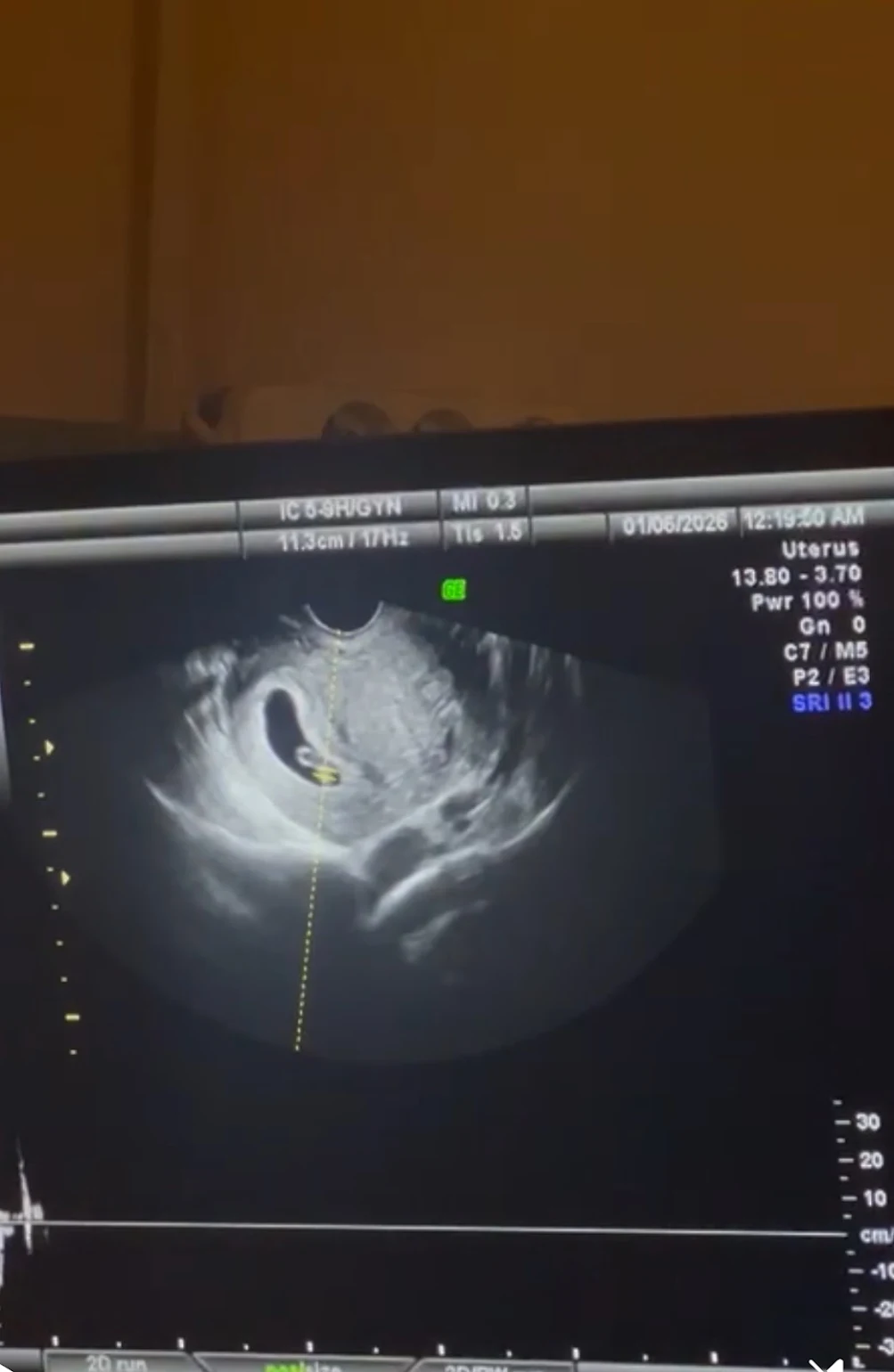
Following the hysteroscopy, we monitored our expectant mother's natural cycle and performed the transfer of one of the suitable embryos in a natural cycle. The first pregnancy hormone level was measured at 160. At the second measurement, this value rose above 500. On the subsequent ultrasound, we saw our baby's heartbeat.
A new concern arising during the pregnancy
Later in the pregnancy, a non-invasive prenatal screening test was requested by a physician. The test result raised a suspicion of an anomaly related to a different chromosome.
Since non-invasive prenatal testing is a screening test and does not provide a definitive diagnosis, we chose the path of diagnostic evaluation together with the family. The amniocentesis results confirmed that our baby was not affected by propionic acidemia and had no chromosomal anomalies.
After many years of losses, uncertainties, and unsuccessful treatments, our couple finally held their healthy baby in their arms.
This story once again showed that, with accurate genetic evaluation, personalized treatment, patience, and mutual trust, hope can be preserved even in the most challenging journeys.
We wish our family a peaceful, happy, and beautiful life together with their healthy baby.
Dear Dr. Soner and Hazel Hanım, our paths crossed through a video, right when I had given up on everything. One of Dr. Soner's videos affected me so deeply that I thought, "this is it." I felt such beautiful things in that moment that I wrote to you right away and looked through your pages. At 11:30 that night, you called me. I said, "this can't be true," but it was meant to be. I answered that call with so much excitement, and I thought, "yes, this is happening." I cried so many nights before finally going to see Dr. Soner. Please don't give up, friends, truly don't — you will find your miracle too. Dr. Soner and Hazel Hanım are so kind, they welcomed us so warmly, there are no words for it. They guided us forward with such beautiful, careful steps, always with such confidence. I don't think there is another doctor who values his work and his patients this much — I say this from all my past experience, because I tried so many times elsewhere and, I'll say it plainly, was let down by how irresponsible the other doctors were. Anyway, I just want to say how wonderful Dr. Soner is. I'm reaching my happy ending now — I owe the joy of experiencing this pregnancy first to God, and then to Dr. Soner and Hazel Hanım. Thank you so much for your patience and care, you are truly wonderful, please know that. I'm so glad our paths crossed, so glad I had the chance to know you both. Our remaining embryos are entrusted to you — I'll be back right after this baby is born. ❤️❤️ We love you so much. I'm sharing this miracle photo here. Come safely into the world, my little one.
Let us reach you quickly about the topics you want to consult.
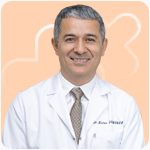
Op. Dr. Soner DÜZGÜNER
Obstetrics and Gynaecology Specialist
Op. Dr. Soner Düzgüner: Provides diagnosis and treatment in areas such as in vitro fertilization, women's health, infertility, gynecological surgery and pregnancy follow-up.