 EN
EN  TR
TR  AR
AR  DE
DE  RU
RU  BG
BG 

What Is Isthmocele (Cesarean Scar Defect)? How Does It Affect Fertility?
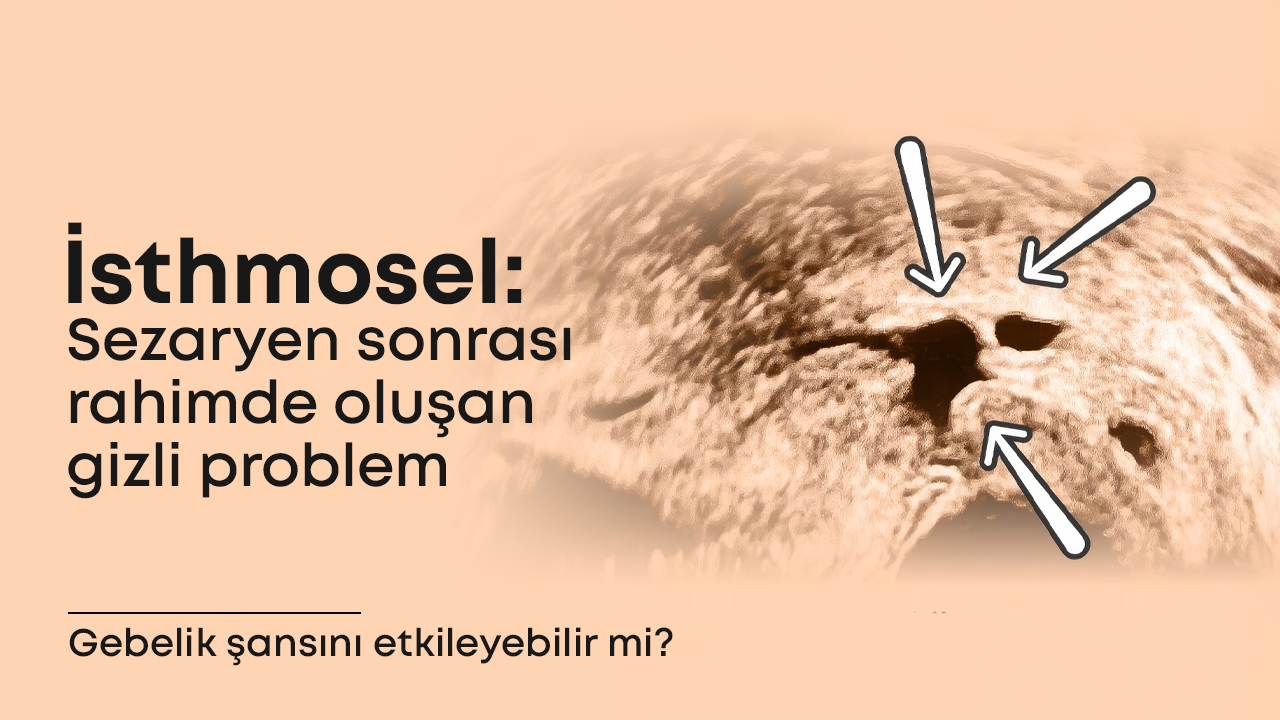
Cesarean birth has become increasingly common today, yet some of the silent but important problems that can arise afterward are not sufficiently recognized. One of these is isthmocele, yeterince bilinmemektedir. Bunlardan biri de isthmoselalso known as cesarean scar defect.dir.
For many women, isthmocele may remain unnoticed for years without causing symptoms. However, in some cases, it can lead to significant outcomes ranging from menstrual irregularities to inability to conceive, and even failed IVF attempts.
In this article, we will comprehensively examine what isthmocele is, how it forms, what symptoms it may cause, and how it affects pregnancy and IVF treatments.
What Is Isthmocele?
Isthmoceleis defined as a a dimple, pouch, or defect at the site of the previous incision in the lower segment of the uterus following a cesarean delivery.
The incision made in the uterine wall during a cesarean may not always heal perfectly. This imperfect healing can result in an area of thinner tissue or a small pouch in the uterine wall. This structural change is what is referred to as isthmocele.
Important Point:
- Not every woman who has had a cesarean will develop isthmocele,
- Ancak geliştiğinde klinik olarak anlamlı sonuçlar doğurabilir
What Causes Isthmocele?
Multiple factors may contribute to the formation of isthmocele:
- Surgical technique used during the cesarean
- Incision made in the lower uterine segment
- Postoperative infections
- Inadequate tissue healing
- Repeated cesarean deliveries
- Becoming pregnant again too soon after delivery•
These factors may interfere with proper and complete healing of the cesarean scar.
What Are the Symptoms of Isthmocele?
Isthmocele is often a silent condition and may not cause any symptoms in some women. However, when symptoms are present, the most common complaints include:
- Brownish discharge after menstruation
- Prolonged menstrual bleeding
- Spotting that continues for days after menstruation
- Chronic lower abdominal or pelvic pain
- Pain during intercourse
- Difficulty conceiving
📌 In some patients, the only symptom may be difficulty achieving pregnancy.
Therefore, isthmocele should always be considered in women with a history of cesarean delivery who are struggling with fertility.
How Does Isthmocele Affect Pregnancy?
The impact of isthmocele on pregnancy depends on the size of the defect and how much it disrupts the uterine environment
In the presence of isthmocele:
🔹 Fluid Can Accumulate in the Uterus
Blood or fluid may collect within the isthmocele pouch. This fluid can flow back into the uterine cavity, negatively affecting the area where the embryo needs to implant.
🔹 Endometrial (Uterine Lining) Quality May Be Impaired
For a healthy embryo implantation, the uterine lining must be biologically suitable. Isthmocele disrupts this environment.
🔹 IVF Success May Decrease
In IVF treatments, internal uterine factors are as important as embryo quality. With isthmocele:
- Implantation rates may be lower
- Repeated IVF failures may occur
🔹 Risk of Miscarriage May Increase
Isthmocele has also been associated with early pregnancy loss.
❗ Therefore, isthmocele must be evaluated, especially in women planning IVF.
How Is Isthmocele Diagnosed?
Diagnosis of isthmocele is mainly achieved through imaging techniques. Commonly used methods include:
🔹 Transvaginal Ultrasound (TVUS)
First-line evaluation method.
🔹 3D Ultrasound
Provides a clearer view of the uterine wall and defect depth.
🔹 Hysterosalpingography (HSG)
Offers information about the uterine cavity contour and scar region.
In some cases, definitive diagnosis is histeroskopi made only during this procedure.
Does Every Isthmocele Require Treatment?
No. Not every case of isthmocele requires surgical intervention.
Treatment decisions are based on:
- Presence and severity of symptoms
- Desire for pregnancy
- Size and depth of the isthmocele
- Thickness of the uterine wall
- History of failed IVF cycles
🔑 The core principle: individualized patient management.
What Are the Treatment Options for Isthmocele?
🔹 Observation:
Appropriate for asymptomatic patients with small defects and no immediate pregnancy intention.
🔹 Hysteroscopic Repair:
A minimally invasive approach performed from inside the uterus.
- Rahim içi sıvı birikimini azaltabilir
- It can reduce intrauterine fluid accumulation, improve menstrual symptoms, and
- optimize the uterine environment prior to IVF.
🔹 Laparoscopic Surgery:
Preferred for larger defects or when the uterine wall is very thin.
- Cesarean scar repair is performed.
- Cesarean scar repair is performed.
The appropriate method is determined after a detailed evaluation.
Why Is Isthmocele Important Before IVF?
Success in IVF is not determined solely by embryo quality; intrauterine factors are equally critical.
Isthmocele should be investigated particularly in women who:
- Have a history of cesarean delivery
- Experience implantation failure in IVF
- Have repeated unsuccessful embryo transfers
Isthmoceles should always be investigated in patients.
After treating isthmocele, IVF success rates can significantly improve.
Conclusion: A Silent but Significant Issue
Isthmoceles are often overlooked, yet they can directly affect the chances of pregnancy. Evaluation is particularly important in women with a history of cesarean delivery who experience fertility-related problems.
👉 👉 Accurate diagnosis means appropriate planning.
👉 Not every cesarean scar is problematic, but when it is, it should not be ignored.
Frequently Asked Questions
Does isthmocele absolutely prevent pregnancy?
No. However, it can make conceiving more difficult in some women.
Can IVF be performed without treating isthmocele?
In some cases yes, but treatment can increase success rates in suitable patients.
Does isthmocele recur?
With proper surgical techniques, the likelihood of recurrence is low.
Contact Us
If you have a history of cesarean delivery and are experiencing pregnancy-related concerns, you can contact us for a detailed evaluation.
👩⚕️ In women’s health, accurate diagnosis is the first step toward effective treatment.
Let us reach you quickly about the topics you want to consult.

Op. Dr. Soner DÜZGÜNER
Obstetrics and Gynaecology Specialist
Op. Dr. Soner Düzgüner: Provides diagnosis and treatment in areas such as in vitro fertilization, women's health, infertility, gynecological surgery and pregnancy follow-up.