 EN
EN  TR
TR  AR
AR  DE
DE  RU
RU  BG
BG 

Good News from Hamburg: Preventing a Disease from Passing to the Next Generation
This time our good news came from Hamburg, Germany. Our patient is 28 years old and first came to us on December 3, 2025. Because her father has Hemophilia A, she was also a Hemophilia A carrier. She had no notable complaints in daily life, such as easy bleeding or bruising. What mattered to us, however, was the possibility of the genetic change that causes the disease being passed on to future generations.
Our patient’s periods were also irregular. She had a period roughly every 45–50 days. Her AMH level was 11.4, and she had anovulatory PCOS, now also known as PMOS. So her ovarian reserve was quite good, but she was not ovulating regularly.
In this patient, our reason for IVF was not so much infertility as the single-gene disease in the family. Our goal was to prevent Hemophilia A from being passed on to future generations by selecting an embryo that was neither a carrier nor affected.
Before starting treatment, we carried out the genetic preparation process we call the “setup”. During this process, the Factor VIII gene mutation associated with Hemophilia A was re-examined in our patient and her carrier status was confirmed. Once the family-specific genetic work was complete, we moved on to IVF treatment.
We started treatment with a total of 200 IU of gonadotropin. At the end of eleven days of treatment, we retrieved 25 eggs. 24 of them were mature, and all 24 fertilized. By the end of the process, we had frozen a total of 15 embryos. It was a truly excellent ovarian response and a successful embryology process.
As part of preimplantation genetic testing for single-gene disorders (PGT-M), we sent five of the suitable embryos for testing. Four of them were found to be normal and suitable for transfer. In this way, we aimed not only to achieve a pregnancy but also to reduce the risk of the family’s history of Hemophilia A being passed on to the next generation.
Because our patient did not ovulate regularly on her own, we prepared the uterine lining with an artificial cycle using Estrofem. Once the lining was ready for transfer, we transferred one genetically tested embryo.
And thank God, our result came back positive.
For us, this story means more than just a positive pregnancy test. It is also a very valuable step toward preventing a serious inherited genetic disease from being passed on to the next generation. Now we look forward to following the rise in her beta hCG level, seeing the gestational sac and then hearing the heartbeat. We hope this good news that began in Hamburg continues in good health.
We wish our patient and her family a blessed, happy and healthy pregnancy. 🤍
Let us reach you quickly about the topics you want to consult.
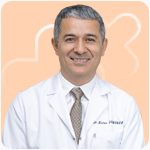
Op. Dr. Soner DÜZGÜNER
Obstetrics and Gynaecology Specialist
Op. Dr. Soner Düzgüner: Provides diagnosis and treatment in areas such as in vitro fertilization, women's health, infertility, gynecological surgery and pregnancy follow-up.